
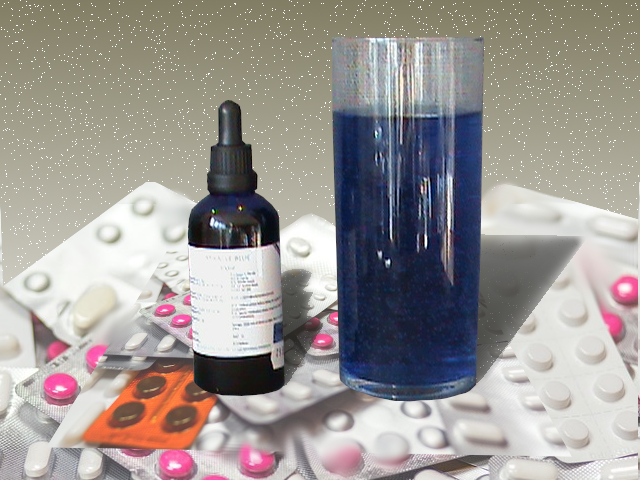

Methylene blue has become increasingly popular for its potential benefits related to cognitive support, mitochondrial function, and cellular health. But like many bioactive compounds, it can interact with medications and supplements in ways that range from mild to potentially serious.
The reason these interactions matter is that methylene blue affects several important systems in the body, including neurotransmitters, blood pressure regulation, and nitric oxide signaling. In particular, it acts as a reversible monoamine oxidase inhibitor (MAOI), which means it can influence levels of serotonin, norepinephrine, and dopamine.
Adderall* (amphetamine / dextroamphetamine)
Methylene blue combined with Adderall is a high-risk serotonergic interaction. Amphetamine/dextroamphetamine increases synaptic dopamine and norepinephrine and has mild serotonergic activity. When combined with methylene blue’s MAO-A inhibition, serotonin metabolism is reduced while release is increased, creating a potential for serotonin syndrome.
Clinically, this combination is generally avoided unless medically supervised, with symptoms of concern including agitation, tremor, hyperthermia, hypertension, and autonomic instability. Even standard therapeutic doses of either agent can contribute to toxicity when combined.
* Adderall is a prescription central nervous system stimulant composed of mixed amphetamine salts (dextroamphetamine and levoamphetamine). It is primarily used to treat Attention Deficit Hyperactivity Disorder (ADHD) and narcolepsy by increasing dopamine and norepinephrine in the brain to improve focus, wakefulness, and impulse control.
Benadryl* (diphenhydramine)
Diphenhydramine is not strongly serotonergic, so the risk of serotonin syndrome with methylene blue is low. However, both agents can affect the central nervous system, leading to additive sedation, confusion, and impaired cognitive function, especially in higher doses or in older adults.
Caution is mainly relevant in situations where diphenhydramine is used for sleep or allergy relief alongside methylene blue therapy, as anticholinergic burden may increase side effects such as dry mouth, urinary retention, and dizziness.
* Benadryl is an antihistamine used to relieve allergy symptoms like hay fever, pet dander, and hives.
Cialis* (tadalafil)
Tadalafil has no serotonergic mechanism, so serotonin syndrome risk is not a concern. The main theoretical issue is hemodynamic: methylene blue can increase vascular tone via monoamine pathways, while tadalafil promotes vasodilation via PDE-5 inhibition.
In practice, this combination is generally considered low risk, but blood pressure responses may be less predictable in sensitive individuals, particularly if methylene blue is being used in higher or intravenous doses.
* Tadalafil is a prescription medication primarily used to treat erectile dysfunction (ED). It is the generic equivalent of the brand-name drug Cialis.
Vyvanse* (lisdexamfetamine)
Lisdexamfetamine is a high-risk serotonergic sympathomimetic. Combined with methylene blue’s MAO-A inhibition, there is a significant risk of serotonin syndrome and hypertensive toxicity.
This combination is generally contraindicated or avoided, with clinical monitoring required if ever considered.
* Vyvanse (lisdexamfetamine) is a prescription central nervous system stimulant primarily used to treat Attention Deficit Hyperactivity Disorder (ADHD) in adults and children.
5-HTP* (5-hydroxytryptophan)
This is a very high-risk combination. 5-HTP directly increases serotonin synthesis, and methylene blue prevents serotonin breakdown via MAO-A inhibition.
Together, they significantly increase the risk of serotonin syndrome, and this combination is generally strongly contraindicated.
* 5-HTP (5-hydroxytryptophan) is a naturally occurring amino acid that acts as a direct precursor to serotonin. Widely used as a dietary supplement.
CoQ10 (Ubiquinone & Ubiquinol- the advanced form)
CoQ10 has no meaningful interaction with serotonin metabolism or monoamine oxidase pathways. Therefore, it is considered low risk when combined with methylene blue.
Any interaction concerns are theoretical and related only to mitochondrial or antioxidant effects, with no clinically significant contraindications reported.
Curcumin 95 (turmeric)
Curcumin has mild effects on drug-metabolizing enzymes (including CYP pathways), but there is no direct serotonergic interaction with methylene blue.
Overall risk is low, though theoretical enzyme modulation could slightly alter metabolism of concurrent medications in complex regimens.
DHEA (dehydroepiandrosterone)
DHEA does not significantly interact with serotonin pathways or monoamine oxidase inhibition. The combination with methylene blue is considered low concern.
Potential hormonal or neurosteroid effects are not known to meaningfully influence methylene blue pharmacodynamics.
Eliquis (apixaban)
Apixaban is an anticoagulant, and methylene blue does not directly increase bleeding risk through platelet inhibition. However, complex critical-care interactions exist in hospital settings where MB may be used.
Overall, this is considered low to moderate theoretical risk, mainly due to clinical context rather than a direct pharmacologic interaction. Monitoring is advised in medically complex patients.
Fish Oil (omega-3 fatty acids)
Fish oil has mild antiplatelet activity, but there is no direct interaction with methylene blue or serotonin pathways.
The combination is generally low risk, though caution is sometimes advised in patients already on anticoagulants or antiplatelet therapy due to additive bleeding tendency (theoretical and usually mild).
Flonase (fluticasone nasal)
Intranasal fluticasone has minimal systemic absorption and no serotonergic activity. There is no meaningful interaction with methylene blue.
This combination is considered low concern.
Ginkgo Biloba (ginkgo)
Ginkgo has mild effects on platelet aggregation and may slightly influence neurotransmitter systems, though not strongly serotonergic. Combined with methylene blue, the main concern is theoretical increased bleeding tendency and CNS effects.
Overall risk is low to moderate, depending on dose and concurrent anticoagulant or antiplatelet use.
Jardiance (empagliflozin)
Empagliflozin has no serotonergic activity and no known interaction with monoamine oxidase inhibition. The combination is low risk.
Clinical concern would only arise in severely ill patients where methylene blue is used in shock or critical care settings affecting renal or hemodynamic status.
K2 Plus D3 (multivitamin)
Vitamin D3 and K2 do not interact with serotonin metabolism or methylene blue pharmacology. This combination is considered low concern.
No clinically significant interactions are known.
L-Arginine
L-arginine increases nitric oxide production and promotes vasodilation. Methylene blue can inhibit nitric oxide signaling pathways, potentially producing opposing vascular effects.
This interaction is considered moderate caution, mainly due to unpredictable blood pressure responses in sensitive individuals or high-dose use of either agent.
Metoprolol Succinate ER (metoprolol)
Metoprolol is a beta-blocker that lowers heart rate and blood pressure, while methylene blue may increase vascular tone via monoamine modulation.
This creates a moderate caution interaction, primarily involving potential blood pressure variability. There is no direct serotonergic interaction, but hemodynamic monitoring may be relevant in clinical settings.
Mounjaro (tirzepatide)
Tirzepatide (GLP-1/GIP agonist) has no serotonergic activity and no known interaction with monoamine oxidase inhibition.
This combination is considered low risk, with no clinically significant pharmacodynamic overlap.
NAC (acetylcysteine)
N-acetylcysteine does not affect serotonin metabolism or monoamine oxidase pathways. It is considered low risk with methylene blue.
No meaningful pharmacokinetic interactions are known.
Paxlovid (nirmatrelvir / ritonavir)
Ritonavir is a strong CYP3A4 inhibitor, but methylene blue is not primarily metabolized through CYP3A4. The main concern remains serotonergic toxicity risk if other serotonergic drugs are co-administered.
Overall interaction is low to moderate theoretical, mostly due to complex polypharmacy rather than a direct MB–Paxlovid interaction.
Probiotic Formula
Probiotics have no serotonergic or pharmacokinetic interaction with methylene blue. This combination is low risk.
No clinically relevant interactions are known.
Quercetin
Quercetin can influence certain CYP enzymes and transporters, but there is no direct serotonergic interaction with methylene blue.
Risk is considered low to moderate theoretical, mainly due to potential effects on drug metabolism in multi-drug regimens.
Tylenol (acetaminophen)
Acetaminophen has no serotonergic activity and no relevant interaction with methylene blue.
This combination is considered low risk.
Vitamin B12 (cyanocobalamin)
No interaction exists between vitamin B12 and methylene blue. This is low risk.
Vitamin C (ascorbic acid)
Vitamin C does not significantly interact with methylene blue at typical doses, though very high doses may theoretically affect redox chemistry in laboratory contexts.
Overall interaction is low concern.
Vitamin D3 (cholecalciferol)
No serotonergic or pharmacokinetic interaction exists. This combination is low risk.
Vitamin K2 (menaquinone)
No meaningful interaction with methylene blue is known. This is low risk.
Xanax (alprazolam)
Alprazolam is a benzodiazepine and is not serotonergic. The main interaction concern is additive CNS depression or altered sedation profile, though methylene blue does not strongly sedate.
Overall risk is low to moderate, mainly depending on dose and patient sensitivity.
Zinc (zinc sulfate)
No interaction with serotonin metabolism or methylene blue pharmacology is known. This is low risk.
Zofran (ondansetron)
Ondansetron is not strongly serotonergic but acts on serotonin receptors (5-HT3 antagonism). While it is not a typical serotonin syndrome trigger, it has been discussed in theoretical or rare interaction contexts.
Overall risk with methylene blue is low to moderate theoretical, with caution mainly in poly-serotonergic regimens.
Zyrtec (cetirizine)
Cetirizine is a non-sedating antihistamine with no serotonergic activity. This combination is low risk.
Overall Methylene Blue Interaction Assessment
Highest concern — should be supervised
Adderall (amphetamine / dextroamphetamine), Vyvanse (lisdexamfetamine), 5-HTP (5-hydroxytryptophan)
Moderate caution
Benadryl (diphenhydramine), Cialis (tadalafil), Ginkgo Biloba, L-Arginine, Metoprolol, Paxlovid (nirmatrelvir / ritonavir), Quercetin, Xanax (alprazolam), Zofran (ondansetron)
Generally compatible
CoQ10, Curcumin, DHEA, Eliquis, Fish Oil, Flonase, Jardiance, NAC, Probiotics, Tylenol, Vitamins B12, C, D3, K2; Zinc, Zyrtec